
Still chasing paper receipts and waiting on approvals?
If so, your expense management process might be causing more frustration than you realize. But there’s hope. Modern tools can bring relief. While spreadsheets, email threads, and handwritten notes may have served you in the past, they can quickly become a source of irritation and compliance risk as your organization grows. Managing expenses isn’t just about reimbursing employees for travel or lunch expenses — it’s about protecting your cash flow, maintaining accurate records, and supporting better business decisions. Whether you’re in finance, HR, or operations, recognizing the signs of an outdated expense management system is essential to staying ahead.
In this article, we’ll explore five signs your current process may be holding your business back. Move toward a modern expense management solution to save time, reduce errors, and give your teams the clarity they need. Recognizing these signs will help you transition to automated expense tracking solutions and improve your overall financial health.
Understanding the Importance of Expense Management
The Role of Efficient Expense Management in Business Health
Expense management is about more than just tracking employee spending. It ensures that a company’s financial resources are used wisely. Effective expense management helps prevent overspending and supports budgeting efforts. It allows organizations to make informed decisions, thus ensuring financial stability.
Implementing a robust expense management system can also enhance employee satisfaction. When processes are smooth, employees are happy to submit their expenses without delays.
How Expense Management Affects Cash Flow and Decision-Making
An efficient expense management process protects cash flow by providing real-time visibility into spending patterns. This visibility enables leaders to assess financial performance and make strategic decisions.
Poor expense management can result in unexpected costs and cash flow shortages. A clear expense management process allows for better forecasting and planning.
5 Signs Your Expense Management Process is Outdated
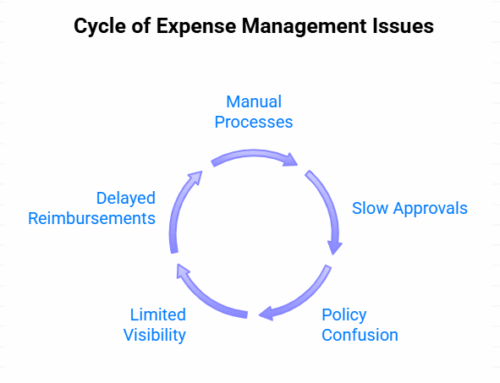
Sign 1: You’re Still Using Manual or Spreadsheet-Based Processes
Relying on spreadsheets and manual processes creates numerous inefficiencies. Data entry errors, lost receipts, and a lack of audit trails can undermine financial accuracy.
Impacts of Manual Processes on Efficiency and Accuracy
Manual processes can lead to missed deadlines and compliance issues. As your organization grows, these inefficiencies can quickly accumulate, wasting valuable resources.
These inefficiencies slow expense processing and ripple across the organization. For finance teams, reconciling mismatched entries and chasing down documentation wastes valuable time. Without centralized records, leadership lacks visibility into spending patterns.
That’s why more businesses are turning to automated expense tracking tools. Digitizing receipts and using an expense management solution built into your payroll and HR systems eliminates tedious tasks and gives you real-time insight into company-wide spending.
Sign 2: Your Approval Workflow is Slow and Disorganized
A sluggish approval workflow can frustrate employees and delay reimbursements. If employees don’t know who to approach for approvals, it creates confusion:
- Employees are unsure of who approves what
- Managers are not notified in a timely way
- No way to track where a submission stands
Common Issues in Approval Workflows and Their Consequences
Slow approvals can lead to disengaged employees and a lack of trust. Missing notifications and unclear processes only worsen the situation.
Expert Insights on Automating Approval Processes
Experts agree that automation is vital for maintaining efficient workflows. Automation speeds up the approval process, resulting in happier teams and better compliance. Automation is essential if you’re looking to streamline the entire expense lifecycle — from submission to reimbursement. Automating expense management speeds up the approval process, reduces errors, and gives your team real-time visibility into submitted expenses.
Mobile apps make it even easier for employees to track expenses and submit receipts from anywhere. When employees have a clear experience, finance teams benefit from cleaner data, faster workflows, and stronger compliance. In short, effective expense management is essential for accuracy and keeping your business agile and efficient.
Your Approval Process Shouldn’t Slow Down the Business
An inefficient approval process frustrates employees and creates manual work that slows down the entire organization. When expense reports go unreviewed or approvers can’t easily access them, employees may delay necessary purchases out of uncertainty. These bottlenecks create unnecessary back-and-forth and ultimately waste valuable time.
Automating the approval process speeds things up and ensures every request follows a consistent path. You can define rules, set thresholds, and notify the right people at the right time. This approach reduces confusion, eliminates unnecessary steps, and helps finance teams confidently process expenses. The result? A smoother, faster, and more transparent experience for everyone involved.
Sign 3: Employees Don’t Understand Your Expense Policy
If employees frequently question what’s allowable for reimbursement, it’s a sign of an unclear policy. Vague guidelines can lead to inconsistent submissions and compliance risks.
The Importance of a Clear and Accessible Expense Policy
Well-defined expense policies help employees understand expectations. This clarity reduces back-and-forth communication and decreases errors in submissions.
Your policy should define which expenses are included, what documentation is needed, how approvals work, and when reimbursements are issued. Use plain language and real-world examples.
Best Practices for Communicating Expense Policies
Consider embedding your policy into expense management platforms. This ensures employees have access to the guidelines during submissions, reducing confusion.
Better yet, embed these rules into your expense management platform so employees see them when submitting expenses. Combining smart tech with well-communicated policies, you help employees make compliant choices while reducing the burden on your finance and HR teams.
Sign 4: You Have Limited Visibility Into Company Spend
Lack of visibility into spending can affect budget management and strategic planning. If leadership struggles to see where money is going, it hinders proactive decision-making.
Consequences of Poor Visibility on Budget Management
Inaccurate or outdated reporting can lead to financial mismanagement. Without clarity, organizations cannot identify areas for improvement or cost-saving opportunities. Real-time expense tracking through a centralized platform changes the game. With better company spend visibility, you can:
- Monitor trends across teams or timeframes
- Spot outliers and unnecessary expenses
- Plan more accurately for future budgeting
Technology Trends That Enhance Spend Visibility
Modern expense management solutions offer real-time tracking and reporting. Leveraging these technologies provides clarity, helping finance teams make informed decisions.
Sign 5: Reimbursements Take Too Long to Process
Lengthy reimbursement processes can lead to employee frustration and disengagement. Delayed reimbursements affect workers’ cash flow and can create a negative work environment.
Effects of Delayed Reimbursements on Employee Morale
When employees wait weeks for reimbursement, it can diminish trust in the organization. Quick reimbursements contribute positively to workplace satisfaction. Delayed reimbursements can cause:
- Employee frustration and disengagement
- Poor financial planning for both workers and departments
- Bottlenecks for payroll and accounting teams
Manual workflows often rely on someone remembering to process a request, or worse, chasing signatures and approvals via email. That slows everything down.
Additional Signs Your Expense Management Needs Attention
- Sign 6: Poor Integration with Other Business Systems — If your expense management system doesn’t integrate with your other software, it can create bottlenecks. A disjointed approach may lead to duplicated efforts and hinder data accuracy.
- Sign 7: Lack of Real-Time Data and Reporting Capabilities — Without real-time data, decision-makers can find it challenging to assess financial performance. Access to timely information is crucial for making strategic budget adjustments.
Solutions and Best Practices for Modernizing Expense Management
Implementing Automated Expense Tracking Solutions
Investing in automated solutions simplifies the tracking process and reduces errors. Employees can easily submit expenses, which speeds up approvals.
Establishing Clear Expense Policies and Guidelines
Create transparent policies that define what’s allowable for reimbursement. Regularly update these policies and ensure they are easily accessible.
Leveraging Technology for Real-Time Visibility and Reporting
Utilize expense management systems that provide real-time visibility into company spending. This enhances data-driven decision-making and keeps budgets under control.
Why Expense Management Is a Competitive Advantage
Streamlined expense tracking contributes to more intelligent decision-making, stronger compliance, and better financial health. It also frees internal teams to focus on strategic initiatives instead of administrative cleanup.
Organizations that automate expense management tend to move faster, plan better, and adapt more easily when priorities shift. In a landscape where flexibility matters, having real-time insight into submitted expenses and spending trends can be the difference between staying on track and falling behind. Treating expense management as part of your core business strategy gives you the control and clarity to operate confidently and scale responsibly.
Addressing Common Myths About Expense Management
Myth 1: Automation is Too Expensive for Small Businesses
Many small businesses believe they can’t afford automation. However, the cost of continued manual processes often outweighs the initial investment in an automated system.
Myth 2: Paper-based Receipts are Sufficient for Record Keeping
While paper receipts can serve as records, they are prone to loss and damage. Digital tracking is more reliable and helps maintain organized records.
Myth 3: Employees Prefer Manual Processes for Control
In reality, most employees prefer streamlined processes that save time. Automation gives them more control over their submissions, increasing satisfaction.
FAQs About Expense Management
Question: How can I tell if our expense management process is holding us back?
Answer: Look for inefficiencies in processes, confusion around approvals, and employee frustrations. If you see these signs, it’s time to reassess your approach.
Question: What features should we look for in a modern expense management solution?
Answer: Seek automated workflows, mobile access, centralized records, and real-time reporting. These features help improve efficiency and transparency.
Question: Why do automation and mobile access matter so much for approvals and reimbursements?
Answer: Automation speeds up approval cycles, reducing delays. Mobile access empowers employees to submit expenses conveniently, helping maintain clean data.
Question: How does better visibility into expenses improve budgeting and decision-making?
Answer: With real-time visibility, finance teams can spot trends and adjust budgets proactively. This helps maintain tighter control over cash flow.
Question: What ROI can we expect from automating our expense management process?
Answer: Benefits often include reduced processing times, fewer errors, and improved employee satisfaction. The ROI becomes evident through these enhanced efficiencies.
Is It Time for a Change?
If you recognized your business in any of the five signs above, it may be time to reevaluate how your organization handles expense management. Outdated processes don’t just slow things down — they create confusion and limit your ability to make confident financial decisions.
Modern expense management solutions are designed with today’s teams in mind. They’re intuitive, secure, and scalable to fit your organization’s growth. Whether you’re dealing with disconnected approval workflows, lost receipts, or inconsistent policy compliance, the right system can help you regain control and efficiency.
At APS, we help businesses move away from paper-based or spreadsheet-heavy systems by offering a fully integrated, easy-to-use expense management platform. Our tools allow payroll, finance, HR, and operations teams to work from a single source of truth.
Ready to Save Time and Simplify Your Workflow?
Looking to modernize your process? Learn how integrated solutions can simplify your expense reporting and reimbursement workflows, and finally move on from paper receipts, manual data entry, and spreadsheet chaos. Take a look at our Expense Management solution to learn more.
The ROI of Modern Expense Management
Recognizing the signs that your expense management process is outdated is vital. Transitioning to a modernized solution can improve efficiency, enhance employee satisfaction, and provide clarity in financial decision-making. If you identified with any of these signs, it’s time to evaluate your expense management approach. Taking action now will safeguard your organization’s financial future.
Switching to a modern system is about more than making things easier — maximizing the return on every dollar.
Tangible ROI Gains:
- Reduced labor hours on processing, verifying, and chasing down expenses
- Fewer errors and rework, which saves time and lowers audit risk
- Faster reimbursements, leading to higher employee satisfaction and engagement
- Improved cash flow visibility so that you can make strategic budget decisions faster
The long-term payoff is significant when you automate expense tracking, align your tools across departments, and adopt a unified payroll and HR solution. An effective expense management process is more than just a back-office function — it’s a strategic asset. Done well, it supports:
- Employee satisfaction and retention
- Financial accuracy and compliance
- More intelligent forecasting and budget planning
- Operational efficiency across your organization
If your process feels outdated, slow, or frustrating, it’s likely costing you more than you realize.
Sources
- How AR and AP Automation Can Help Conquer Manual Inefficiencies
- Financial Operating Guidelines
- Guide to Business Expense Resources
- 15 Tips for Identifying and Addressing Operational Inefficiencies
- Unlocking ROI in HR Tech: The Role of Strategic Audits
- Automation is Taking Over the Expense Report and That’s Okay